 The Dependency Inversion Principle is the fifth and final design principle that we discussed in this series. It introduces an interface abstraction between higher-level and lower-level software components to remove the dependencies between them.
 Here, we will learn how to implement the Dependency Inversion Principle as the second step to achieve loosely coupled classes. First, let's understand what is Dependency Inversion Principle (DIP)? DIP is one of the SOLID object-oriented principle invented by Robert Martin (a.k.a. Uncle Bob)
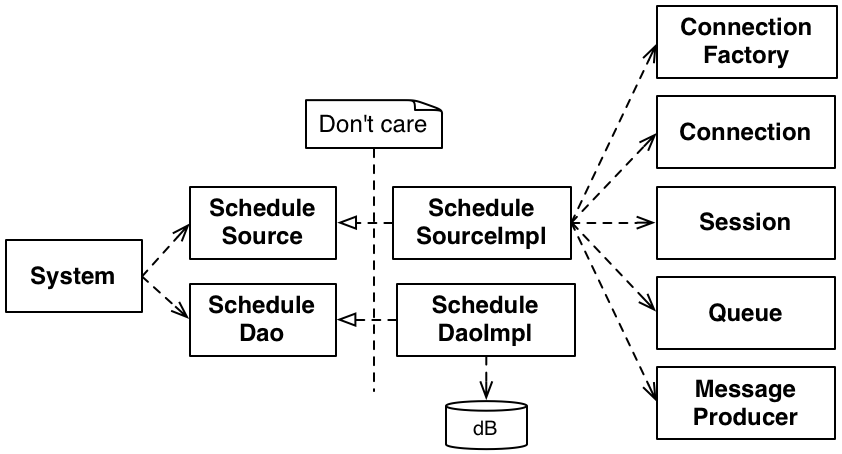 My original introduction to the Dependency Inversion Principle came from Robert (Uncle Bob) Martin around 1994. It, along with most of the SOLID principles, is simple to state but deep in its application.